State of the Shield: Taiwan’s Semiconductor Chip Manufacturing
Explore the relationship between semiconductor manufacturing, geopolitical competition and technology supply-chain exposure, with key judgments and indicators to watch.
A dated example of ERI’s longform intelligence, not a current market update. Assessments reflect the report’s publication date.

- Growth and market choicesWhat political or geopolitical developments could change the case for entering, expanding, or remaining in a market?
- Security and resilienceWhich new or evolving threats could affect your people, sites, and business infrastructure, and where should you prioritize protection and preparedness?
- Operations and supply chainsWhere could disruption to supply chains, energy, communications, or critical routes affect business continuity, and when should you activate alternatives?
- Leadership prioritiesWhat needs a decision now, what can wait, and what evidence would change the assessment?
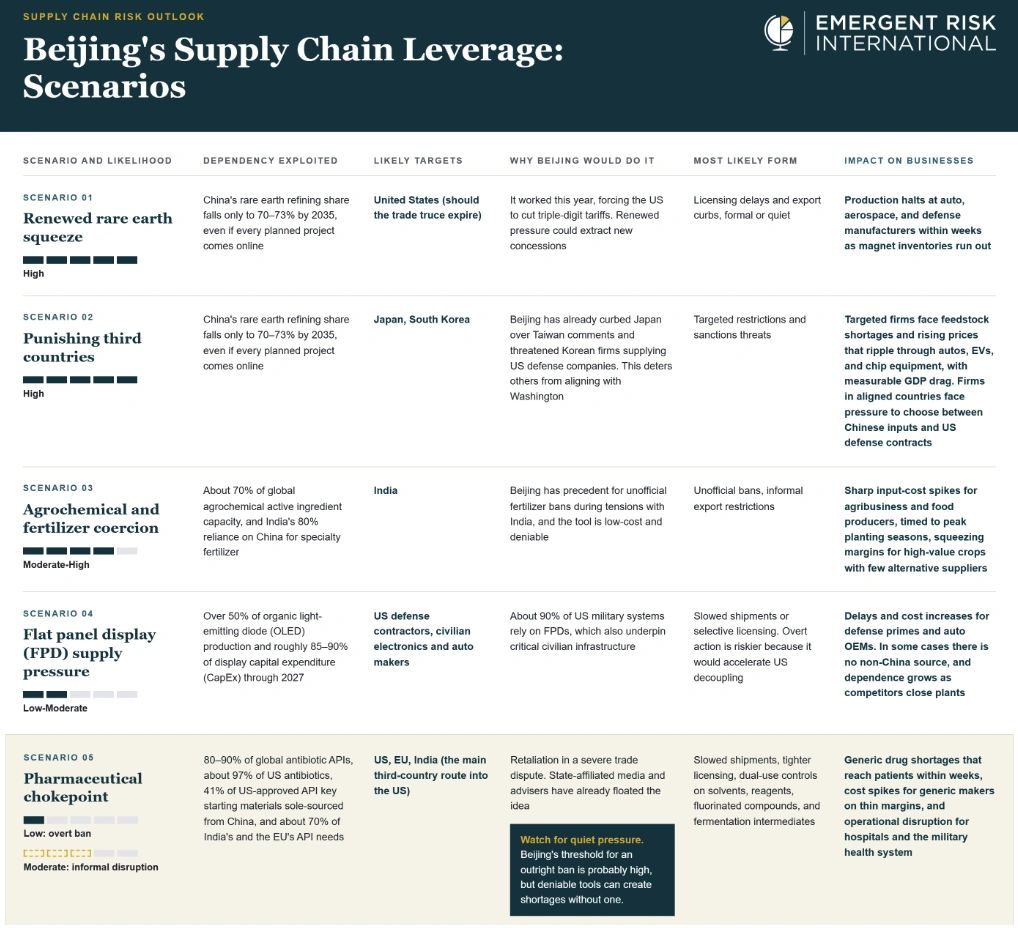
More than country background. A basis for the call.
Consider an organization evaluating expansion into a market where political and trade conditions could change. The intelligence task is to identify the developments that matter to the investment, assess their implications, and specify what to watch before and after a commitment.
The useful output is a clearer assessment of the business exposure, the assumptions behind it, and the indicators that could warrant a different course.
Illustrative application only. This is an example of a decision question, not a client case, forecast, or investment recommendation.

Intelligence-led decisions.
Clarity for your business in a complex world.